
You may have seen or heard ads for “fiber-powered internet.” What is fiber-powered internet? Is it the same as fiber internet? Short answer: no. In this edition of Translating Tech, Ziply Fiber Vice President of Marketing, Ryan Luckin, explains the important distinction between these terms.
Fiber internet basics
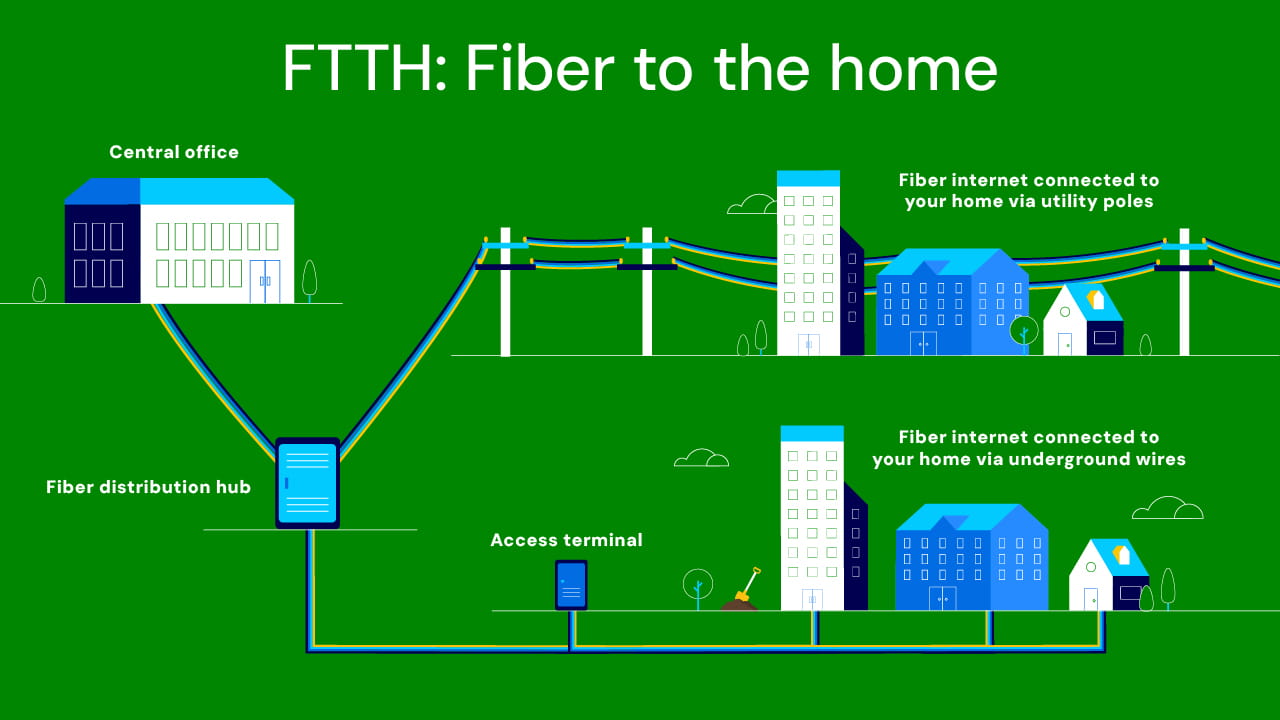
Fiber internet uses fiber-optic cables to transmit data. True fiber internet networks run entirely on fiber-optic technology. This starts at a regional Central Office, where these thin glass strands originate and distribute to cities and towns and ultimately to individual homes and businesses.
Buildings that use fiber internet will experience faster, symmetrical upload and download speeds, less lag and minimal network congestion. Fiber internet is quickly becoming the preferred method of connectivity for its superior speed and ability to transmit large amounts of data with low latency and ping—meaning equally fast download and upload speeds that leave cable speeds in the dust.
Read more: Latency vs. ping
Fiber-powered internet
With fiber internet proving superior quality and performance, it’s no wonder that legacy cable internet providers want to get in on the action. But don’t be fooled: fiber-powered is not the same as authentic fiber-optic internet.
Internet service providers that boast “fiber-powered” internet have figured out a way to say they offer fiber-optic connectivity without offering true fiber internet.
Here’s the deal. Fiber-powered means that a coaxial cable ISP is employing fiber connectivity for some part of its network, with the final connection to the destination being coaxial cable. In other words, the ISP connects to a fiber-optic network, but it can’t say it’s offering fiber internet, because the connection to the home is still cable.
Acronym decoder: ftth vs. fttn vs. hfc
Here are three acronyms you need to know to understand how fiber and fiber-powered internet work.
FTTH
FTTH stands for fiber to the home. FTTH is what true fiber networks offer. Remember how the glass strands start at the Central Office and distribute all over the region? Well, once these cables make it to a neighborhood, they split off to connect to each individual home. This means that customers have their own dedicated fiber connections, and they don’t have to share bandwidth with the neighbors. This is the most important distinction that fiber networks have to offer: end-to-end connectivity that delivers symmetrical multi-gig speeds with no throttling or peak-time network congestion.
FTTN
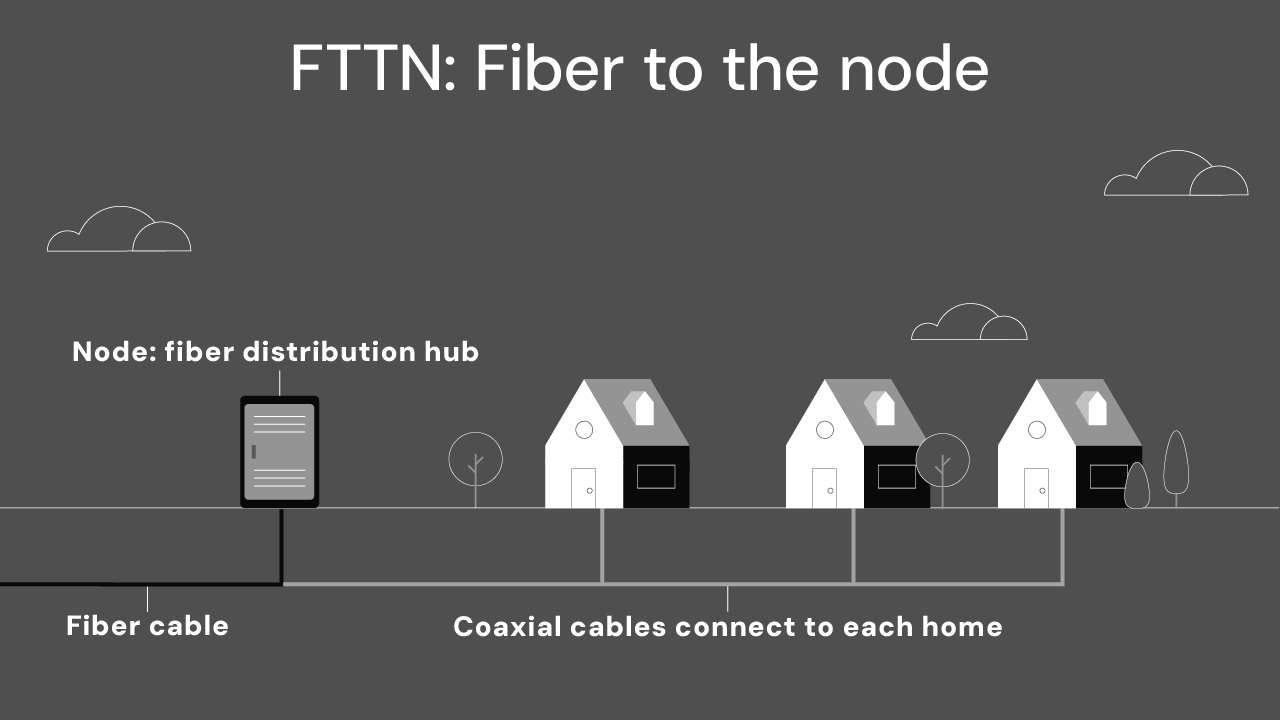
FTTN means fiber to the node. The node is the hub from which those connections distribute into the neighborhood. The node usually looks like a large box alongside the sidewalk. Fiber internet terminates here, and coaxial cable picks up the “last mile” of connectivity to individual homes. That’s how ISPs can get away with calling their cable internet “fiber-powered.” In reality, though, customers are getting the same cable internet service.
HFC
HFC stands for hybrid fiber-coaxial cable. This is the technology that some legacy cable ISPs are using to connect the fiber to the copper.
Is fiber internet actually better than fiber-powered internet?
Now we have established that fiber-powered internet stops short of bringing fiber to the home. Does that mean it’s any worse than true fiber internet?
Even with fiber-powered internet, you will still have to deal with the downsides of cable internet, which include slower upload times, network congestion at peak usage hours and potentially more lag.
Fiber-powered internet is simply a marketing method to convince cable customers that they’re getting something better than cable. That said, if HFC is the best you can get because fiber to the home is not yet available in your area, it may still be a good product. It’s just not as good as fiber internet because it’s not true fiber internet.
If you can get true fiber internet, like what we offer at Ziply Fiber, that’s always the best choice for the fastest, most reliable connectivity.
About the author:
Ryan Luckin is the Vice President of Marketing at Ziply Fiber. He has a dog named Tater and he hates black beans and yellow cheese.